Short answer: cedar gives you a natural, warm wood deck that needs a finish and some attention to keep its color. Composite gives you a deck that never needs staining, but it still needs cleaning, it gets hot in direct sun, and in Ontario it can bring extra paperwork at permit time. Neither one is the wrong choice. They suit different people.
We build decks in both materials across the GTA, so this guide sticks to what each one is like to own, with sources for the facts. If you are also weighing pressure-treated lumber, start with our cedar vs pressure-treated comparison. This page is only about cedar against composite.
Cedar: what it is like to live with
Western red cedar is a naturally durable wood. The Western Red Cedar Lumber Association describes it as naturally resistant to rot, decay and insects. It has a warm pinkish-gold color and it is comfortable underfoot, which is a big part of why people choose it.
The trade-off is what the sun and rain do to the color. You have two paths:
- Let it weather. Cedar left unfinished loses its natural color and turns grey. The same association notes that in most climates it does not weather evenly and is likely to develop a dark, blotchy grey look. If you like grey, a grey weathering stain can even it out, and it may need to be reapplied from time to time. Upkeep for an unfinished deck is mostly keeping it clear of debris and cleaning it with a mild oxygen bleach solution.
- Keep the color. A deck stain does that, and the stain has to be redone. Clear and transparent finishes with UV filters are described as lasting one or two years, depending on exposure. Tinted semi-transparent stains give more UV protection than clear ones.
So with cedar, the question is whether you enjoy a little yearly upkeep, or are happy to let the deck age into a grey.
Composite: what it is like to live with
Composite boards are a manufactured product, usually wood fibre and plastic. Trex, one of the largest makers, says its composite never had to be stained. That is the main reason people pick composite. A few things are worth knowing before you do:
- It still needs cleaning. Trex says all exterior materials need cleaning, and that if pollen and dirt sit on the surface, mold can feed on it. Warm soapy water and a soft brush is the basic routine. TimberTech asks for cleaning at least once a year.
- It gets hot. Trex says its decking will get hot in direct sun, like concrete or wood, and that darker colors feel hotter. Take care with bare feet and small children. Some lines are made with heat-reducing technology, and even those still get hot on a hot day.
- Color can shift early on. TimberTech notes that composites can show temporary discoloration from natural wood extracts, which usually weathers away in 8 to 10 weeks. Trex says its older-generation boards fade to a lighter color in the first 12 to 16 weeks. Ask which generation of board you are being quoted.
- Winter care depends on the brand. Trex says a plastic shovel is fine for snow, and TimberTech says metal shovels or plastic shovels with a metal edge will damage the surface. They differ on ice melt: Trex lists calcium chloride or rock salt, while TimberTech says calcium chloride is fine and to avoid rock salt. Read the care guide for the exact board.
The Ontario permit angle
The permit rule itself does not change with the material. In Toronto, the 60 cm (24 inch) height rule applies to cedar and composite alike. We cover it in our Toronto deck permit guide.
What can change is the paperwork for composite. The City of Kitchener explains in a 2024 building bulletin that the Ontario Building Code names wood as the decking material, and that a composite board needs one of the following before the city will approve it for a permit: an authorization from the province's Building Material Evaluation Commission, a Canadian Construction Materials Centre (CCMC) evaluation, or an engineer's report. It also says not every product on the market has this paperwork, and that test results from other countries are not accepted. Railings made partly or wholly of aluminum, steel or glass are treated separately and can need an engineer's design.
That bulletin comes from Kitchener, and every city applies the code through its own building department. The practical advice is the same anywhere in the GTA: before you pick a composite product, ask whoever is quoting it whether that exact product has the evaluation or engineering your city accepts.
How to decide
- Cedar suits you if you want real wood, you like the look and feel of it, and you are fine with a stain every year or two, or with letting it go grey.
- Composite suits you if you never want to stain or sand, you are fine with a cleaning routine, and you can live with a deck that heats up in the sun and a bit more permit paperwork.
- Either one needs a well-built frame with footings below the frost line. The material on top does not make up for a weak structure.
What this looks like on our jobs
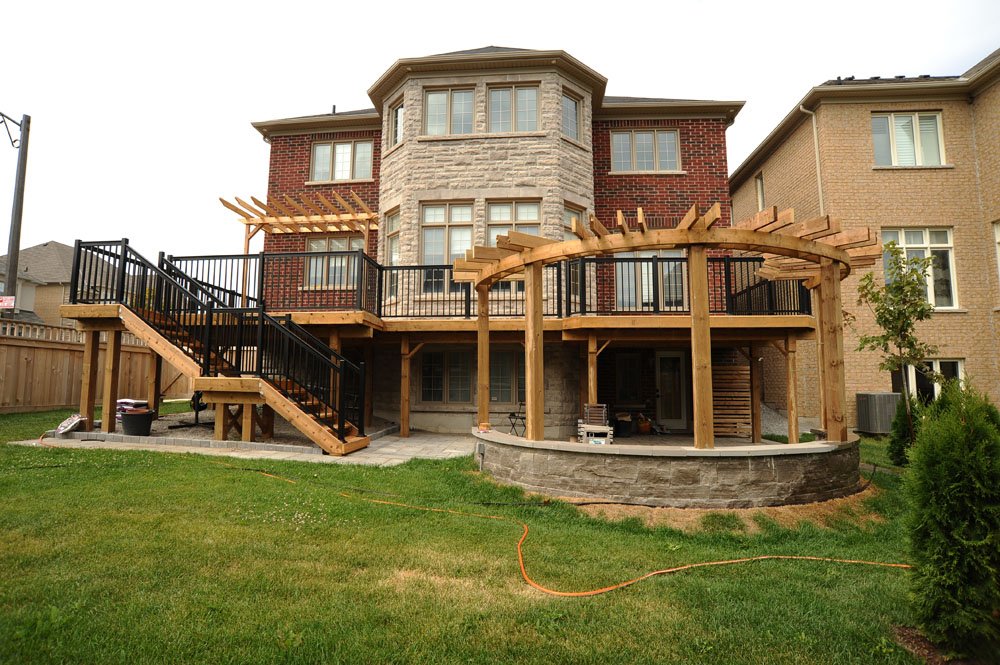
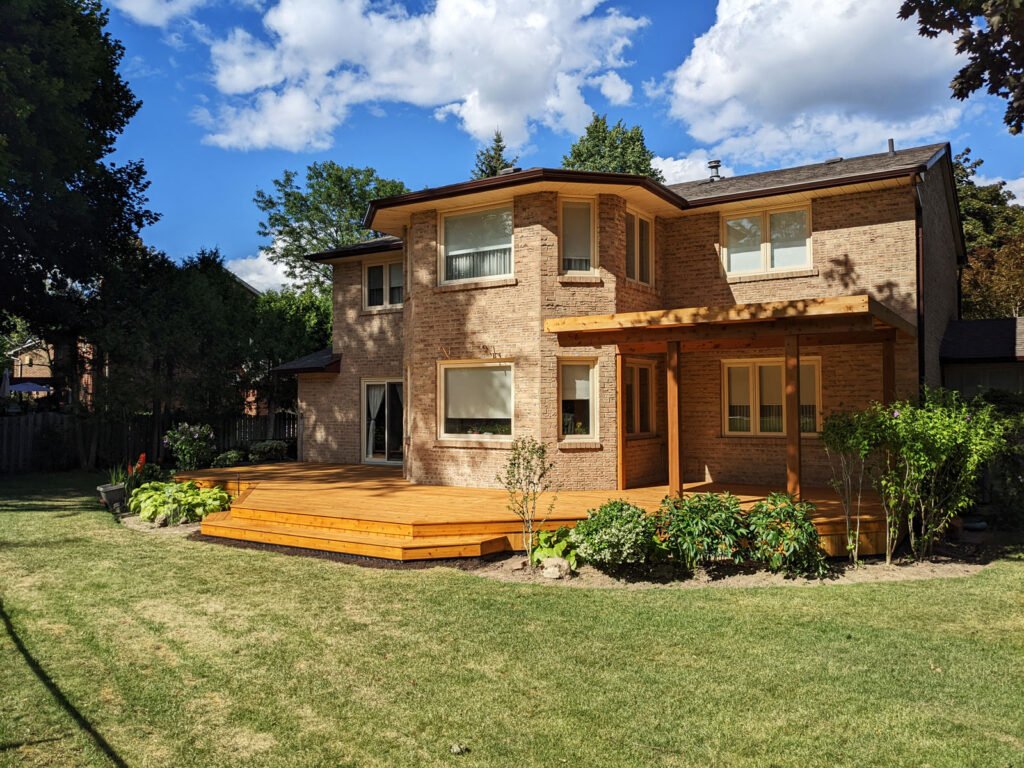
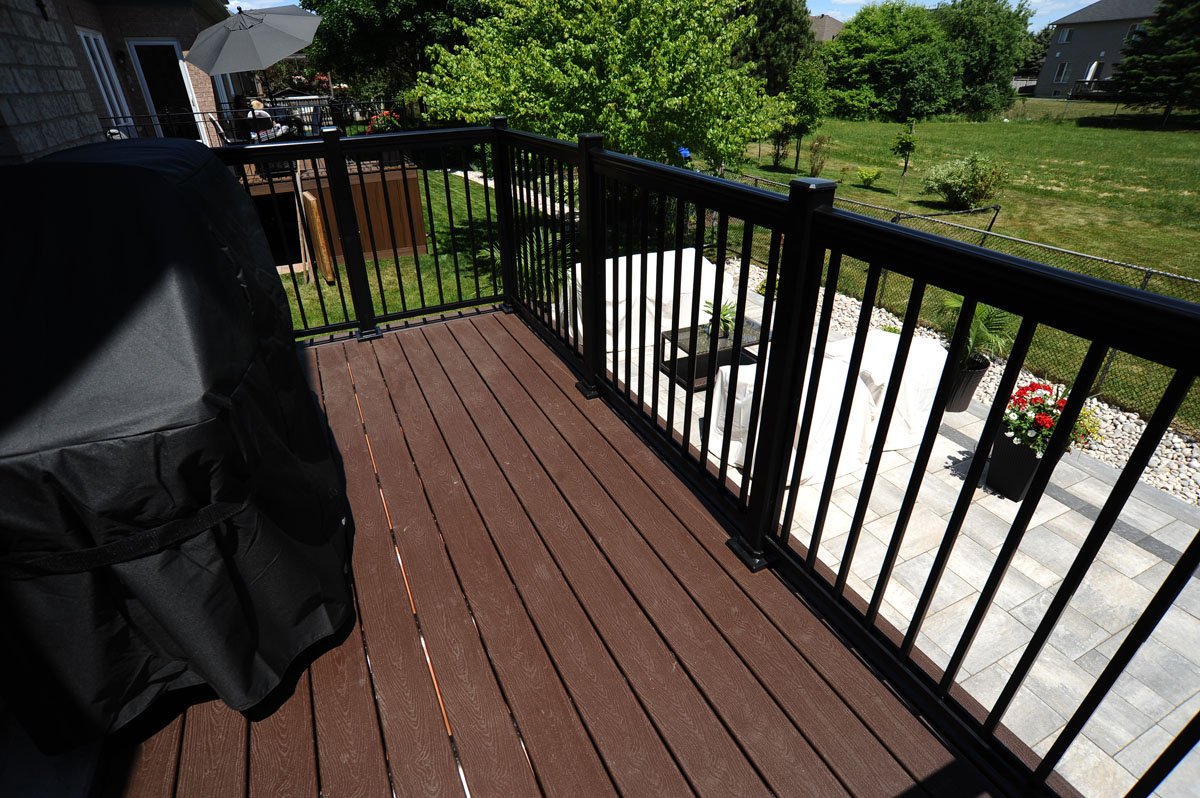
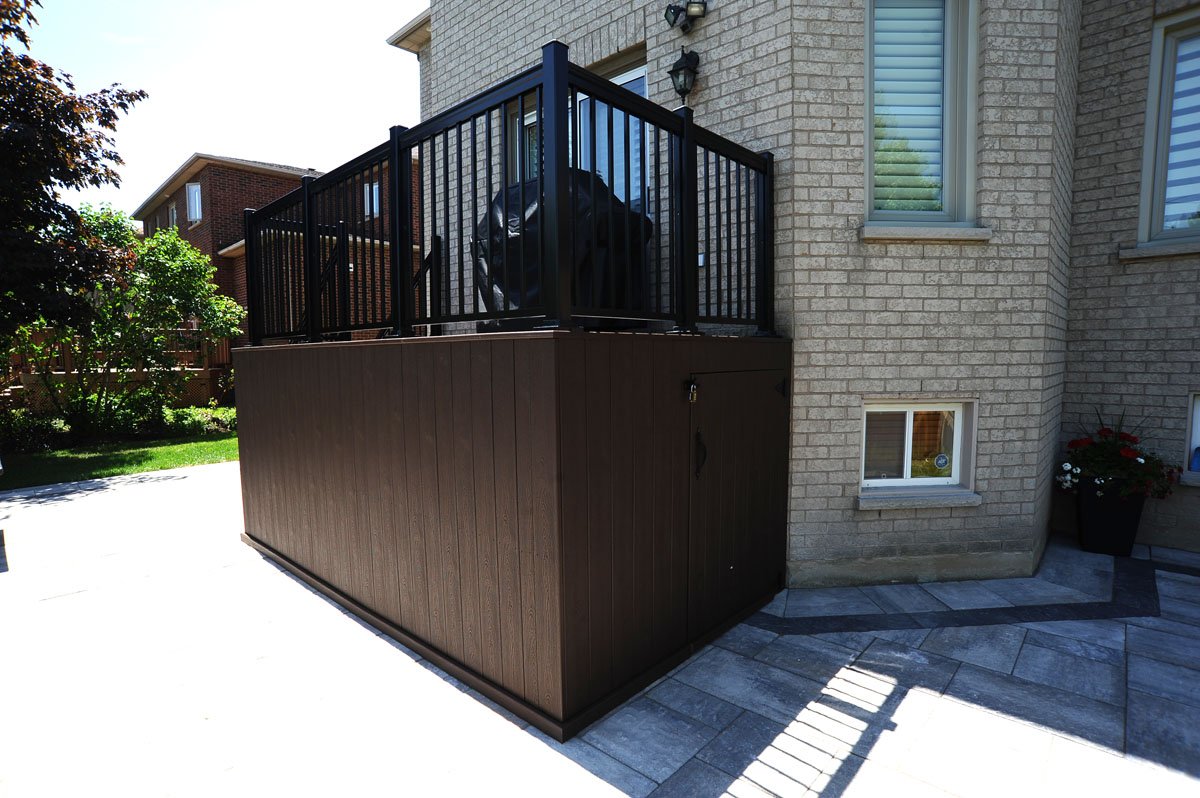
We have built both. The photos below are from our own projects: a cedar high deck with a half-round pergola, a low-level cedar deck with a louver pergola, and a second-storey composite deck with black aluminum railings. We have not put prices on this page, because the gap between the two depends on the size and design of your deck. If you want to compare real numbers, send us your yard details and we will quote both materials. You can also see how we build decks.
Service area: YKWoodWorking serves Toronto, Mississauga, Brampton, Vaughan, Richmond Hill, Markham, Oakville and Burlington in the Greater Toronto Area (GTA). Building rules in this guide are Ontario-wide; permit steps and fees differ by city, so check yours.
Sources
- Western Red Cedar Lumber Association (Real Cedar) - Finishing Western Red Cedar Decking
- Trex - How to Clean a Trex Deck
- Trex - FAQ (decking heat)
- Trex - Natural Weathering of early-generation composites
- Trex - Traditional composites vs high-performance
- TimberTech - Care and Cleaning Guide
- City of Kitchener - Building Bulletin BB 2024-01, Composite and Alternative Decking and Guard Materials
Cedar and composite decks we have built